


Keep a regular sleep schedule
Go to bed and wake up around the same time each day when possible.
Recovery guide
Rest helps your body recover and can make nutrition, movement, and consistency easier to maintain.
Sleep is part of health, not a bonus. A steady routine, a calmer evening, and enough recovery time can support better daily choices.
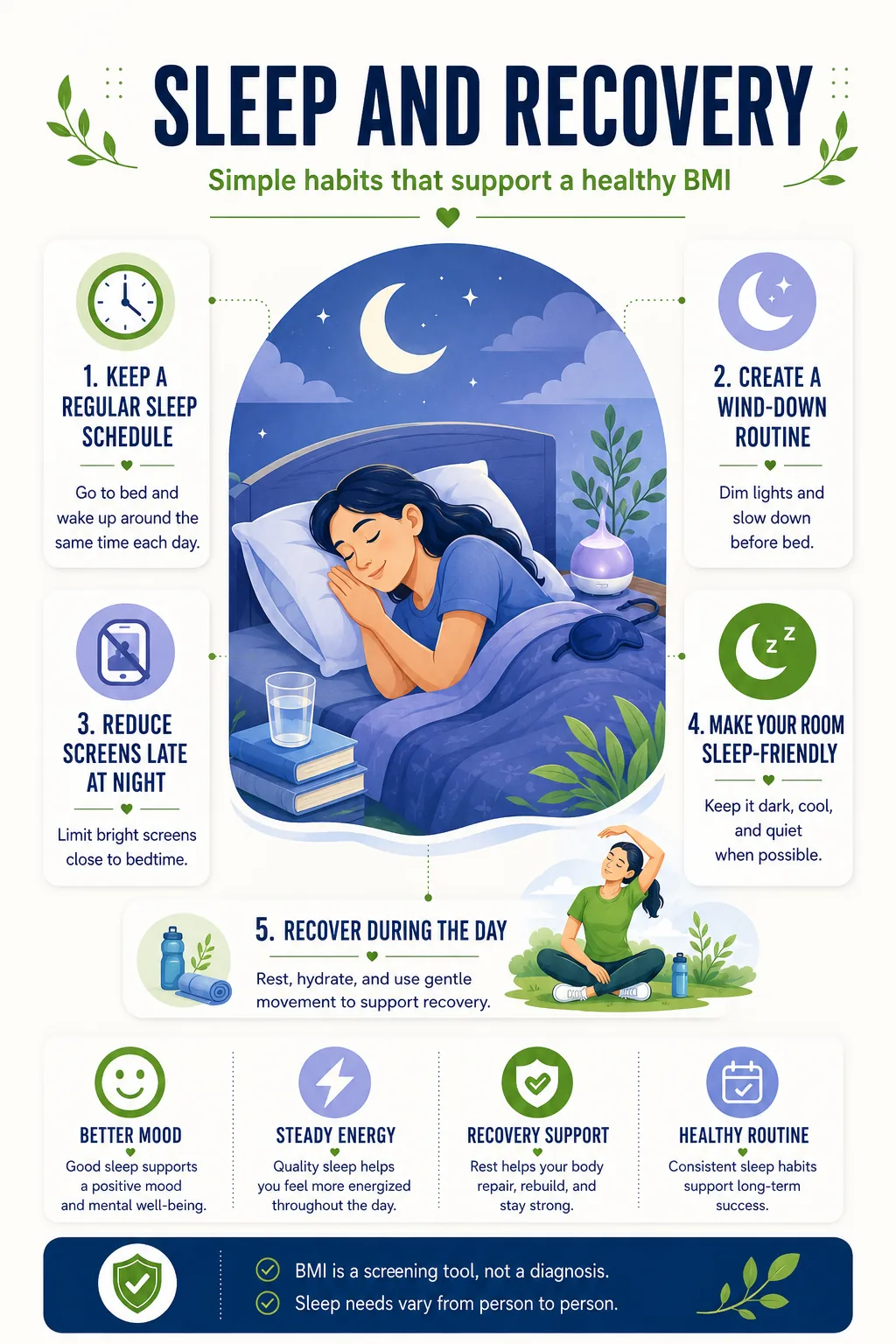
A visual summary of simple sleep habits that can support energy, recovery, routine, and overall well-being.
BMI is a screening tool, not a diagnosis. Sleep needs vary from person to person.
Small sleep habits can make recovery more sustainable. The goal is not perfection, but building routines that help your body and mind rest more consistently.
Recovery showcase
Consistent, repeatable habits matter more than perfect nights. Start with one or two small changes and build from there.
Go to bed and wake up around the same time each day when possible.
Dim lights, slow down, and give your body time to shift into rest mode.
Limit bright screens close to bedtime when possible.
A darker, quieter, and cooler room can help support better sleep.
Rest, hydration, and gentle movement can support recovery and daily balance.
BMI is a screening tool and is not a diagnosis. It does not explain sleep quality, stress, fitness, or body composition. To understand the number itself, review what BMI is and compare results with the BMI chart.
Ask for help when needed. Persistent sleep problems are worth discussing with a healthcare professional.
This content is for adults 18 years and older and is intended for informational purposes only. It is not a substitute for professional medical advice, diagnosis, or treatment.
Use the calculator as a quick starting point, then read your result with rest, recovery, and individual needs in mind.
T9 BMI Check is an educational resource for adults. BMI is a screening tool, not a medical diagnosis, and the information here is general rather than personalized medical advice. We research our content against trusted public-health sources, work to keep it factually accurate, and review it periodically. For guidance about your own health, please consult a qualified healthcare professional.
Last reviewed: 2026-07-08