


Walk more
Short walks after meals, during breaks, or at the end of the day can help movement feel easier to repeat.
Movement guide
Simple movement habits can support energy, strength, mood, and a more useful conversation about your BMI result.
Movement does not need to mean intense workouts. Small daily actions such as walking, stretching, stairs, short activity breaks, and light strength work can help build a healthier routine.
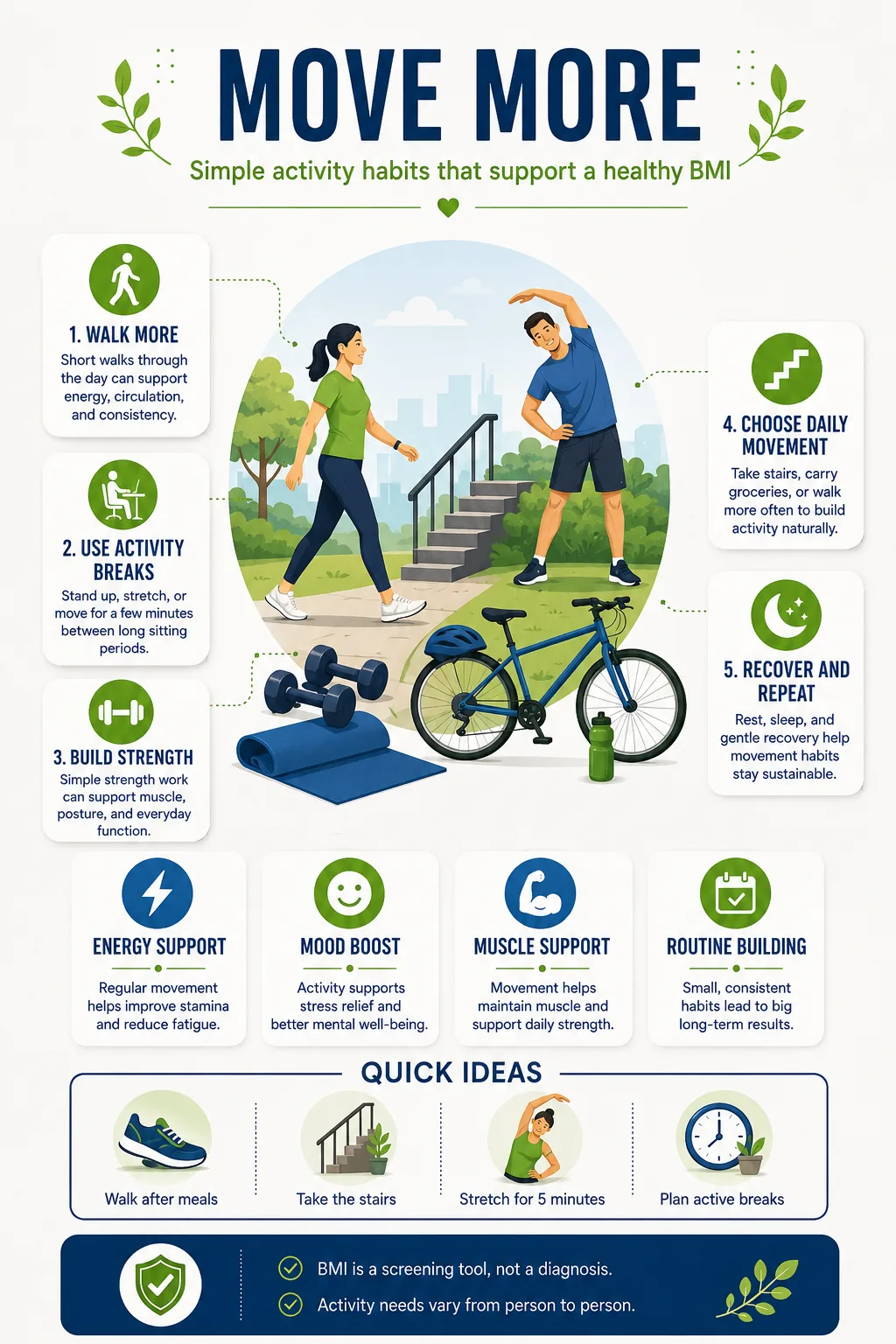
A visual summary of simple activity habits that can support energy, mood, strength, and everyday routines.
BMI is a screening tool, not a diagnosis. Activity needs vary from person to person.
Small movement habits can fit into normal routines without needing intense workouts. The goal is to make movement easier to repeat, adapt, and sustain over time.
Movement showcase
You do not need a gym or a strict plan. Everyday movement, repeated often, is what builds a lasting routine.
Short walks after meals, during breaks, or at the end of the day can help movement feel easier to repeat.
Stand up, stretch, or move for a few minutes between long sitting periods.
Simple strength work can support muscles, posture, balance, and everyday function.
Take stairs, carry groceries, walk more often, or add movement to tasks you already do.
Rest, sleep, and gentle recovery help movement habits stay sustainable.
Regular movement can support general well-being, energy, strength, and routines. BMI is only a screening tool, and it does not directly measure fitness, muscle mass, or individual health. Compare your result with the adult BMI category guide, then interpret it with context.
BMI is a screening tool, not a diagnosis.
Movement supports general well-being, but individual needs vary. For broader context, see healthy habits and BMI.
This content is for adults 18 years and older and is intended for informational purposes only. It is not a substitute for professional medical advice, diagnosis, or treatment.
Use the calculator as a quick starting point, then read your result with context, habits, and individual needs in mind.
T9 BMI Check is an educational resource for adults. BMI is a screening tool, not a medical diagnosis, and the information here is general rather than personalized medical advice. We research our content against trusted public-health sources, work to keep it factually accurate, and review it periodically. For guidance about your own health, please consult a qualified healthcare professional.
Last reviewed: 2026-07-08